
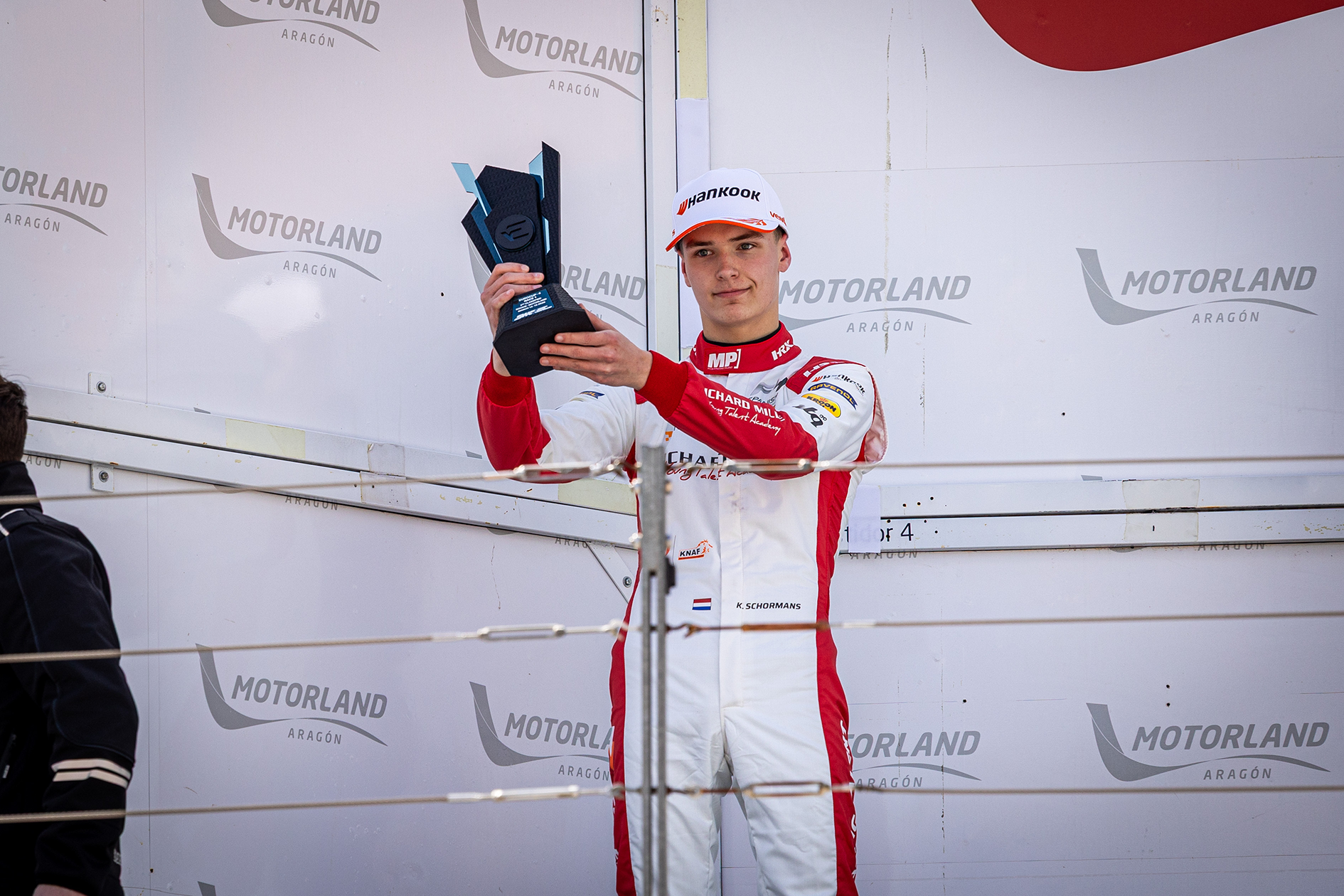
A promising Dutch rookie made his mark in last month’s Spanish Formula 4 Winter Championship, as Kasper Schormans managed to secure the rookie title for MP Motorsport. He surprised himself with the achievement but it has handed the 16-year-old driver from Born even more confidence ahead of the main F4 Spanish season, which gets underway next month at Valencia. We sat down with the young driver from Limburg as he spoke candidly about his unusual route into single-seaters and shared his expectations for his first full season in motorsport.
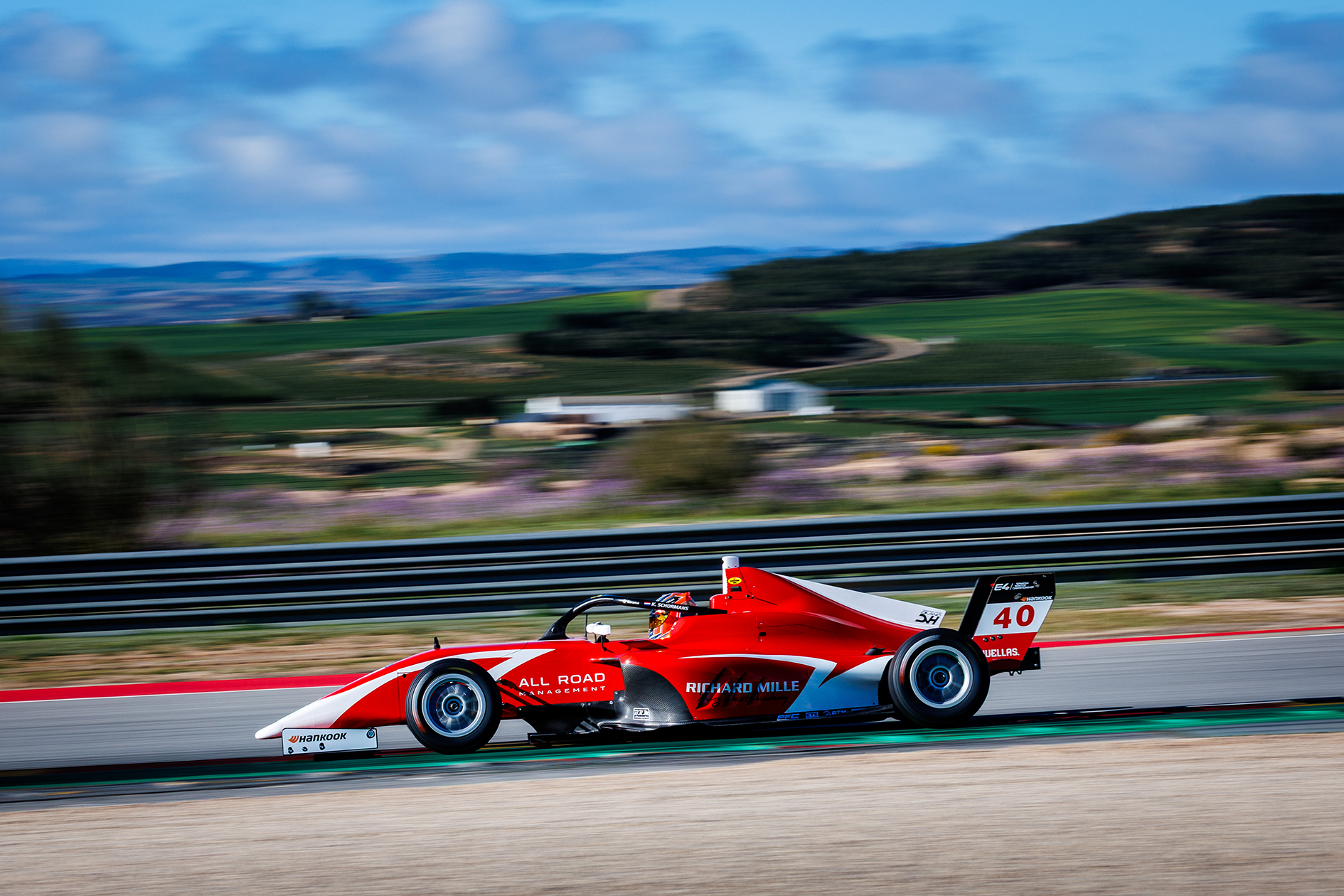
The Spanish Winter Championship finished around two weeks ago, while at the same time there is almost a month still to go before Kasper Schormans and MP Motorsport get down to business for the first race weekend of the F4 Spanish Championship. He has just returned from a visit to his Amsterdam sports physio when he sits down for the interview. “Actually, a day at the circuit is quieter than my days during this break. This morning I had to go to school, then take the train to Amsterdam, then go back home to the gym. Tomorrow I have a full day in the simulator, and Friday it’s back to school and another session at the gym in Amsterdam. It’s pretty hectic, but I’m happy to do it!”
He doesn’t have a motorsport family background, and yet Schormans has been fascinated by everything on two and four wheels from a young age. Early on, he told his father about his desire to race. “My parents have always told me and my brother that we should do what we enjoy and they would support us fully in that. Some love football, others love tennis, but for me, it was racing. Perhaps it’s quite unusual to want that, but I didn’t care for kicking a ball at all. It was that pure motorsport feeling, the speed, the adrenaline – that was the reason I wanted to reach Formula 1.”
And so, one day, his father Rob took his six-year-old son to Tom Coronel’s go-kart track. There, none other than Tom himself – now the father of Schormans’ team-mate Rocco! – spotted the potential. “Buy your own kart and join a racing team,” was Coronel’s advice. No sooner said than done: the family bought a Parolin Rocky four-stroke, initially just for a year, but it soon became apparent that young Kasper was very good at it. “So the plan quickly transformed into competing for trophies the following year. I was still very young, the other boys were all eight or nine years old, but by the end of the season, I was right up there with the leaders. The very next season, we won the first race straight away!”Midway through the season, Schormans moved to Hugo Motorsports, the karting team run by former Formula Renault driver Hugo van der Ham. There, he switched to two-stroke machinery, starting at Micro Max level. His progress was so impressive that in 2019 he moved to SP Motorsport, the team run by local karting legend Stan Pex. With SP, he finished second in the Dutch championship and third in the Benelux championship. Mini Max was the logical next step, but then Covid struck. After the pandemic, the bold decision was made to move straight up to juniors. “I was ten and 1.45m tall, I couldn’t even see over the steering wheel, and carried 40 or 45 kilos of ballast! But it was good training for the following year. In that season, I finished sixth in the Benelux Championship, although I wasn’t physically strong enough to keep up on some tracks.”
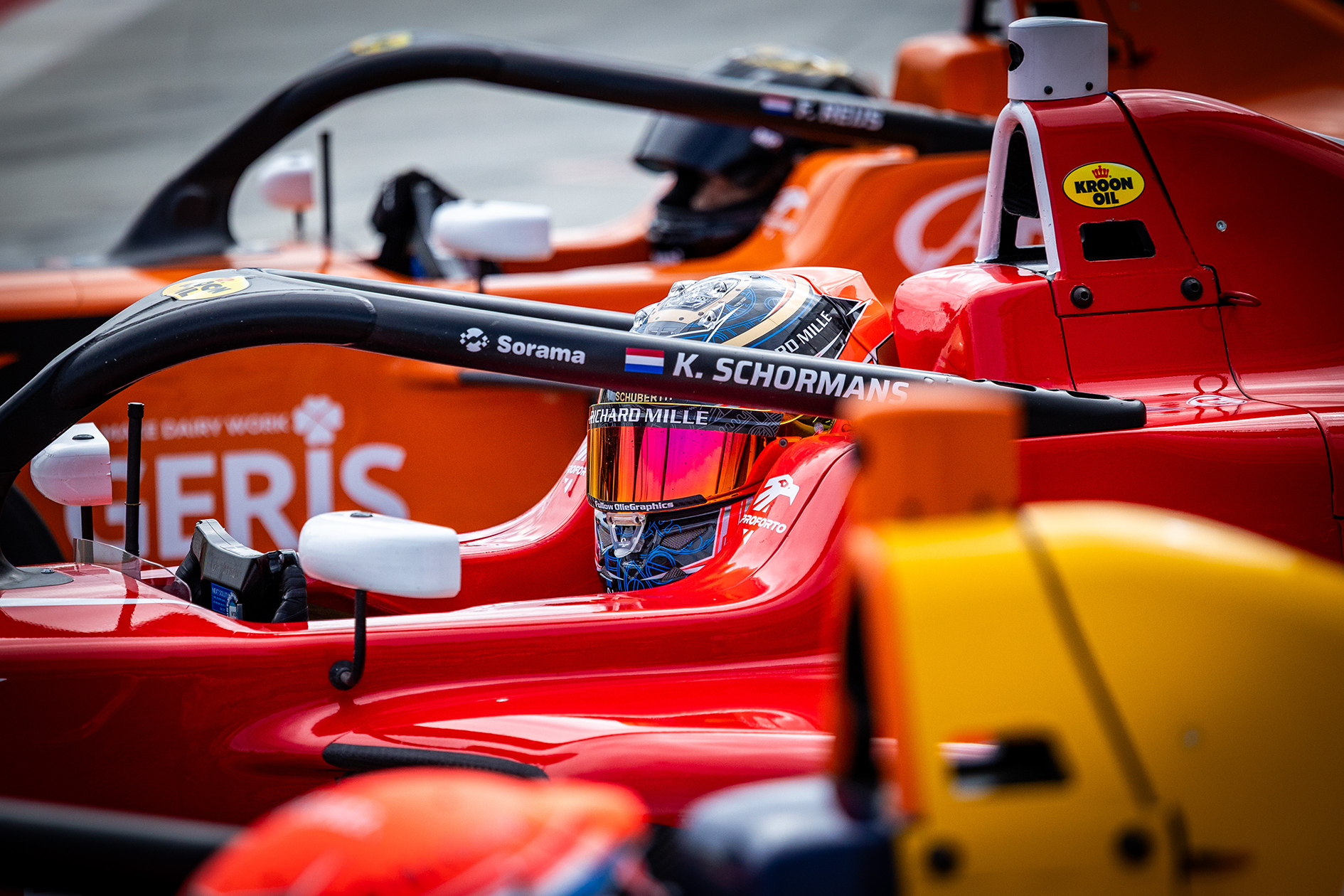
Every cloud has a silver lining, as the initial potential that Tom Coronel had spotted became ever so apparent. It led to a move to JJ Racing for 2022, resulting in the Dutch title, while he also grabbed third in the Benelux, fourth at European level and third at the Rotax Max World Finals. Enough to earn an invitation from the French Sodikart factory team in Malaysia, where he won the Asian title. For a family that was hardly blessed by a generous budget, this offered the next opportunity to move up another level. “Usually, factory teams like that don’t look at Rotax, as their focus is on OKJ and OK drivers. We then struck a deal with Sodikart that allowed me to finish the Rotax season with JJ. In the end, I crossed the finish line in first in 46 of the 75 races, including a win in the European winter championship.”
The following year, Schormans became an official works driver for Sodikart in the KZ2 shifterkart class. He finished fourth in the European Championship and became the youngest podium finisher in both an FIA and a WSK race. In 2025, he was once again among the frontrunners in the European Championship, World Championship and Champions of the Future as the youngest competitor. All the time, however, he was racing in the shifter karts rather than the OKs, which form the usual route into single-seater racing. “That’s exactly what I want to show people. There is another way than going to Italy and spending loads of money for ten years to get into single-seaters. We could never afford those budgets, but it was my fortune that I was able to continue as a factory driver. That way, you can also get there, even if it’s from Rotax Max, X.30 or KZ2. If you’re good enough, you’ll always stand out.”
Schormans certainly did stand out, as he made a mid-season switch to the Birel ART works team before the youngster from the Limburg province of the Netherlands was introduced to the selection committee at the Richard Mille Young Talent Academy, the partnership between Richard Mille and Allroad Management. Every year, the watchmaker and the talent management agency jointly organise a shootout between no less than 65 promising young drivers, with the winner being rewarded with a season at MP Motorsport in Spanish Formula 4. But before it came to that, Schormans had already decided to focus entirely on a future in single-seater motorsport.
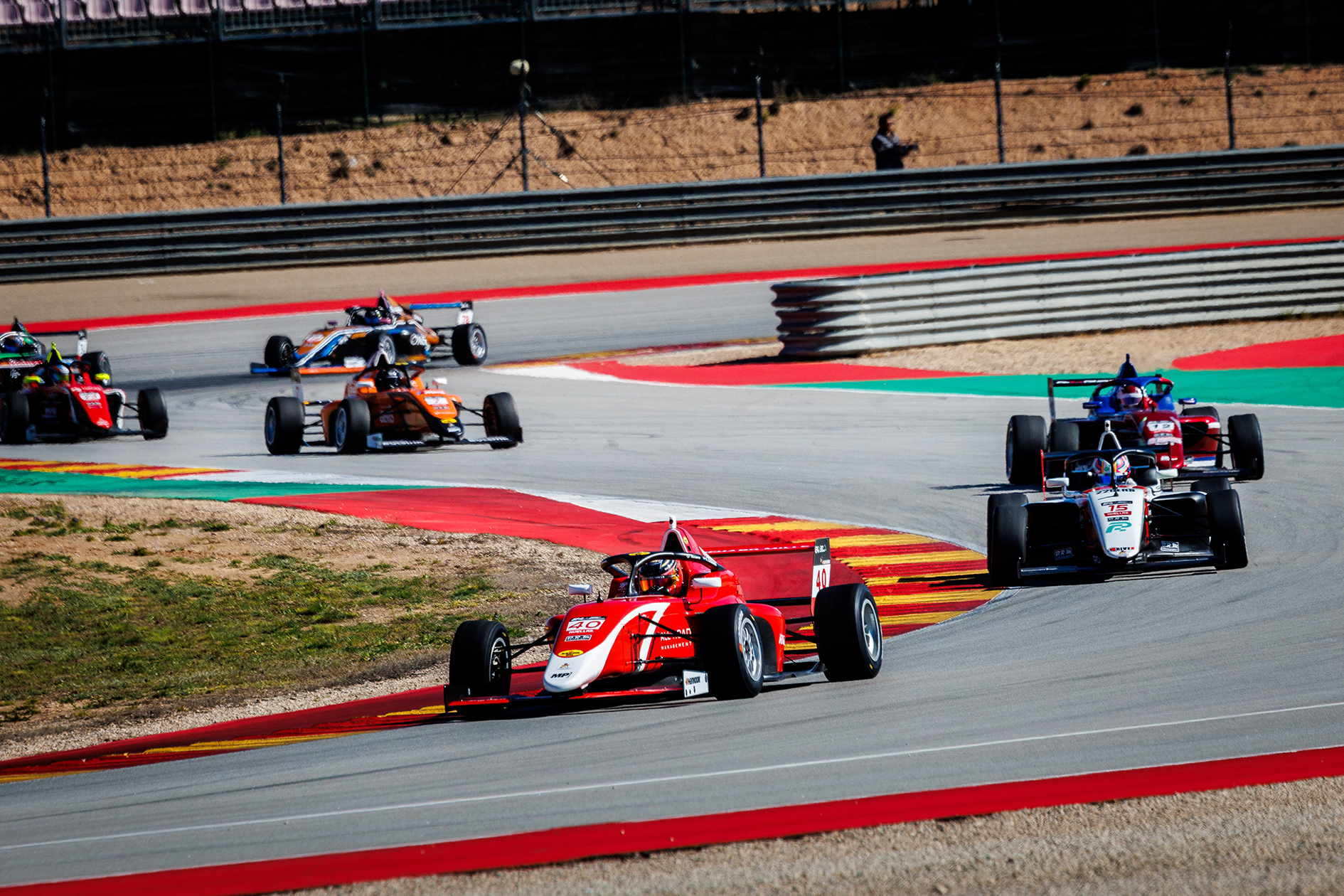
And that future did come to pass, because he won the Richard Mille shootout – which is the reason for our conversation and his presence in this year’s F4 Spanish Championship. That’s why we ask him for an honest answer – would he have been in motorsport this year if he hadn’t won the shootout? “No, I would have quit and gone back to my studies. Everything depended on the shootout. For me, that was the only option to ever make my dream come true. So you can’t describe the feeling when I won it. Five minutes beforehand, I felt that knot in my stomach – if this doesn’t work out, it’s simply over. And then your name is called. A truly unforgettable moment.”
Schormans had a reputation to live up to straight away, because the Richard Mille institute has shown in recent years that it has a knack for picking some outstanding shootout winners. After all, Keanu Al Azhari, Mattia Colnaghi and Ean Eyckmans as the last three winners all shone in their debut season at MP. “I know what I’m capable of and I try to live up to that. That’s all I can do. I think it’s enough, based on what I’ve shown so far. Everyone is very happy with it, in any case. So there’s no pressure on me.”
Is it a bonus that, as a Dutchman, he can make his single-seater debut with a Dutch team? “It’s not necessarily an advantage, but it does make things easier if you can speak Dutch with your team. And it’s nice that I can be at the workshop within an hour and a half. It’s a good feeling that they’re so close by.” Does that closeness also apply on a personal level? “I was welcomed with open arms, I didn’t feel like an outsider when I first walked in. There’s a real family atmosphere in the team, you can bond with them really quickly.”
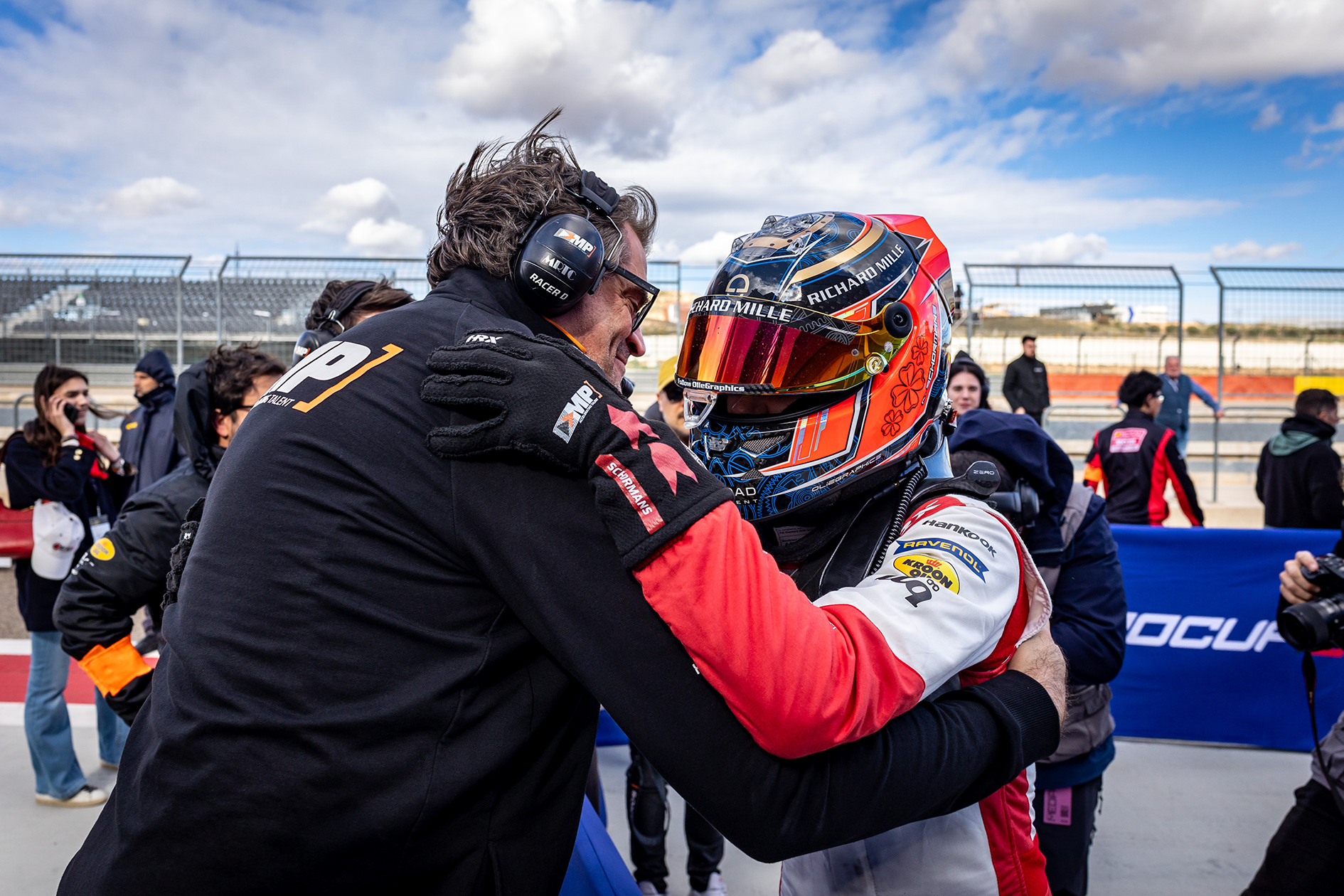
That family feeling was reinforced during Schormans’ first race weekends in the Spanish Winter Championship, as teamwork went smoothly, resulting in the rookie title. Meanwhile, his mother Inge was there for every race, as over those three weekends, she became a familiar face in the paddock. “It’s wonderful that she’s around, especially as my dad can never really be there. He’s always very busy with work, but still tries to come to one or two races every year. It’s really nice to have someone with me, because my family and friends are the most important thing to me outside of racing.”
How has he found the transition from karts to single-seaters? “Coming from KZ, the driving style is completely different! You have to brake really late, as your minimum speed is crucial. In karts, your minimum speed doesn’t really matter – you have to get on the throttle as soon as you exit the corner. You’re also much freer with your body in a kart, being able to move your hips around to get the kart to do what you want. In a car, you’re completely fixated, so you have to be much more delicate with the car. It did take me a few days to get the hang of it, but looking at the results, things are looking good now.”
On the other hand, according to Schormans, he actually finds it easier to race single-seaters. “In karts, our battles are much more brutal. Sometimes it takes up to three to four laps to be able to finally truly overtake someone. In single-seaters, you just plant your car next to them. In fact, you don’t even to fully do that – if you have the inside line, it’s your corner. However, in cars, you do need more spatial awareness to avoid tangling wheels.”
That’s exactly what happened to Schormans on his first weekend, when a fight for position ended up with a badly damaged car behind the crash barrier. “I’d started in P10 and was battling for P4, so it had been a good comeback race up to that point. But yes, it was a bit of a scare. I managed to recover well from it, because I finished fourth in the sprint race that followed. It was also great to see how quickly the team managed to rebuild the car. Despite the next race starting just two hours later, we were ready for it. It was all far from ideal, but we managed to make the best of it.”
Schormans’ hopes beforehand were for a top-ten finish in the winter series’ final championship table, so collecting sixth and his first win was a real boost. He secured the rookie championship on top of that, meaning that in the month of March of his first full season, Schormans has already secured his first title in single-seater. “That was beyond my wildest expectations, especially when you look at the guys with more test days and races under their belts. But it’s good that we’re up there with them. The more experience we gain, the easier it will be towards the end of the season.”
Schormans’ main objective in F4 Spanish is to challenge the sophomore and third-year drivers as soon as he can, as in the winter championship, they still claimed the five top spots in the final standings. “If you look at the progress made in the winter races, I think the gap is getting smaller and smaller. It might still be tough in the first races at Valencia and Portimão, but from the third weekend at Motorland Aragon onwards, I should be right up there.”
One final question remains for the driver from the Limburg region – what are they supplementing their drinking water with in his province? After all, why do so many Dutch top drivers, from Robin Frijns to Max Verstappen, hail from Limburg? “It’s obviously very tasty drinking water! No, really, I think it’s because Genk is perhaps one of the biggest karting tracks in the world. For me, that’s just fifteen minutes away. You could find me there three or four times a week when we didn’t have a race. If I finished school at 12 o’clock, it was easy to spend half a day on the track. Every extra hour of driving time simply counts towards your learning process.”


